
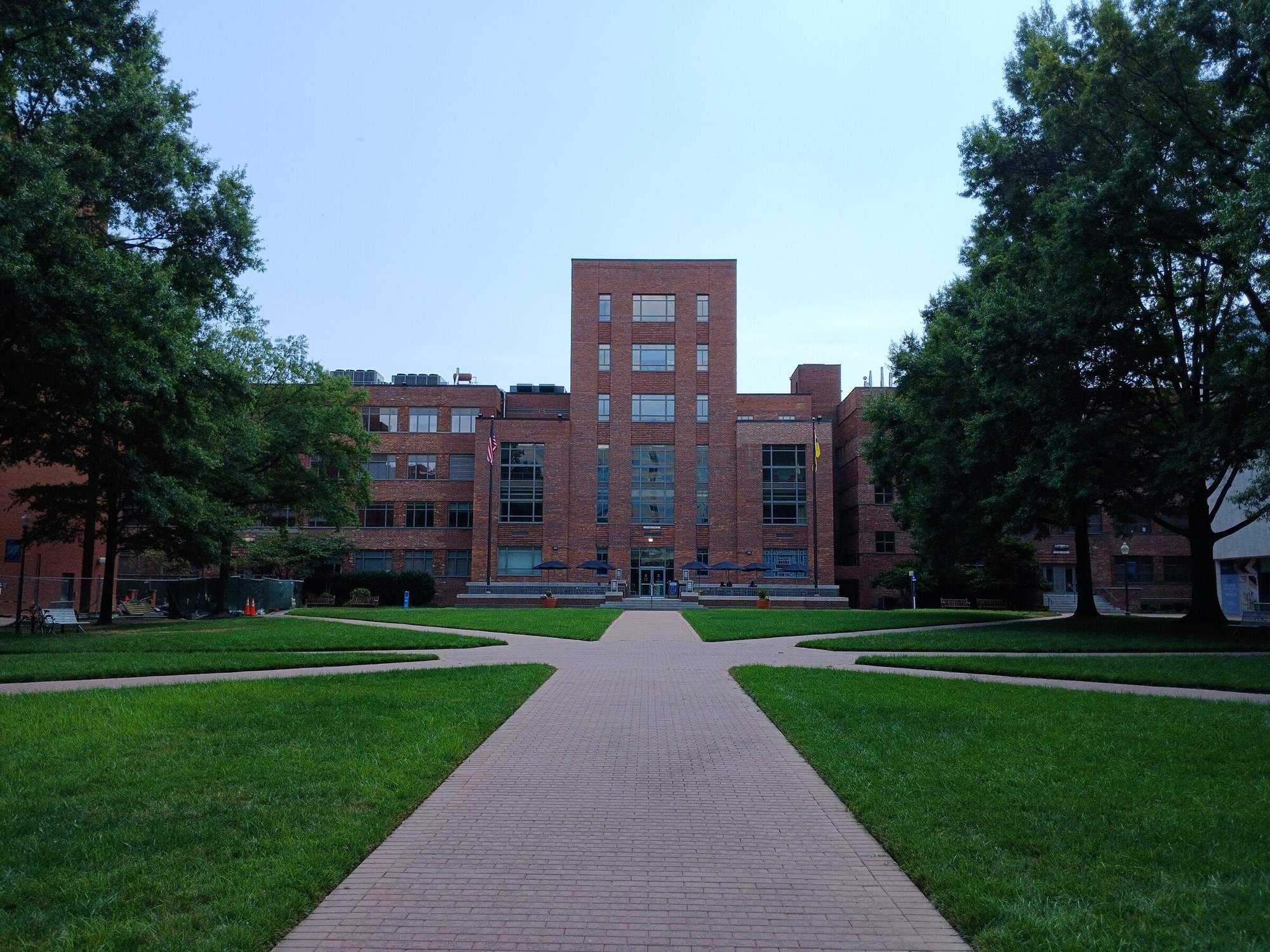
George Washington University
The George Washington University puts you in the middle of the nation's capital — the Foggy Bottom campus sits just blocks from the White House, the State Department, the Kennedy Center, and the National Mall, with its own Metro station right on campus. First-years split between Foggy Bottom's high-rise halls (about 70%) and the leafier, more traditional Mount Vernon Campus a few minutes away by the free Vern Express shuttle. GW requires students to live on campus for three years, every residence hall is air-conditioned, and DC's weather is humid and mild — a hot, stormy move-in and a chilly but rarely brutal winter.
What to wear in Washington, month by month
This corner of the country breaks every generic packing list. It is not about surviving cold — it is about staying dry through a long gray winter and a famously short, beautiful summer.
| Move-in (late Aug) | 70–88°F | Hot, humid, and prone to afternoon thunderstorms. Every hall has A/C, so you're comfortable inside; shorts, tees, and a rain jacket. |
| Sept–Oct | 52–80°F | Warm easing into a beautiful, crisp DC fall — one of the best stretches of the year. Layers and a light jacket. |
| Nov–Dec | 36–56°F | Cooling and often gray, with chilly days but rarely bitter. A warm coat and a hoodie. |
| Jan–Feb | 30–48°F | The coldest, dampest stretch — some snow and ice, but mild by Northern standards. A medium winter coat and gloves. |
| Mar–May | 44–78°F | A humid, blooming spring — the famous cherry blossoms, plenty of rain, warming fast. A rain jacket, umbrella, and layers. |
What George Washington University lets you bring
- A rain jacket, umbrella, and comfortable walking shoes — DC summers are stormy and you'll walk the city and ride the Metro daily
- A light fan is optional (every hall is air-conditioned) but pleasant for the hot, humid late-August move-in
- A medium winter coat, gloves, and a hat — DC winters are chilly and damp with some snow, but rarely brutal
- A small refrigerator and microwave (or a rented MicroFridge), plus storage bins and Command strips for compact city rooms
- Twin XL bedding (confirm your specific hall)
- UL/ETL power strip with a built-in circuit breaker — not a bare extension cord
- Damage-free wall hangings like Command strips — no nails or screws
- Low-draw LED desk and task lamps
- A fan, a reusable water bottle, and UL-listed electronics
- Open-coil / open-flame cooking: toasters, toaster ovens, air fryers, hot plates, electric grills, sandwich makers
- Candles, incense, wax warmers, and anything with an open flame
- Halogen lamps
- Extension cords without a breaker; outlet splitters and multi-plug adapters
- Space heaters and personal A/C units (unless your school provides/approves them)
- Hoverboards, e-scooters, e-bikes, and other e-mobility devices
- Weapons of any kind — including decorative — and fireworks
- Candles, incense, halogen lamps, and anything with an open flame
- Hot plates, toaster ovens, and open-coil cookers outside the shared kitchens
- Space heaters and personal A/C units — every hall is already air-conditioned
- Pets other than fish in a small tank (approved service/assistance animals aside)
These come from George Washington University's official housing pages and cover the essentials plus the genuinely local rules. Double-check the current official guidance before you buy — policies and renovations change every year.
Getting your room at George Washington University
- 01After you deposit (spring)
Register for housing
Once you've paid your enrollment deposit, register for housing through the GW Home portal. Register by the early-June priority date (around June 2) — later registration can delay your assignment. GW requires students to live on campus for three years.
- 02Spring–summer
Rank preferences and request a roommate
In the portal, complete your housing profile, rank campus and hall preferences (Foggy Bottom vs. the Mount Vernon Campus), and request a roommate or opt into matching. First-years in a residence hall must also select a required meal plan.
- 03Summer
Get your assignment
GW posts your building, room, roommate(s), and campus mailing address over the summer, with detailed move-in instructions and your timeslot to follow by email.
- 04Late August
Move in for new-student welcome
First-year move-in falls in late August at an assigned timeslot, leading into GW's new-student welcome programming before classes begin. Foggy Bottom move-in is a well-drilled city operation — follow your timed window.
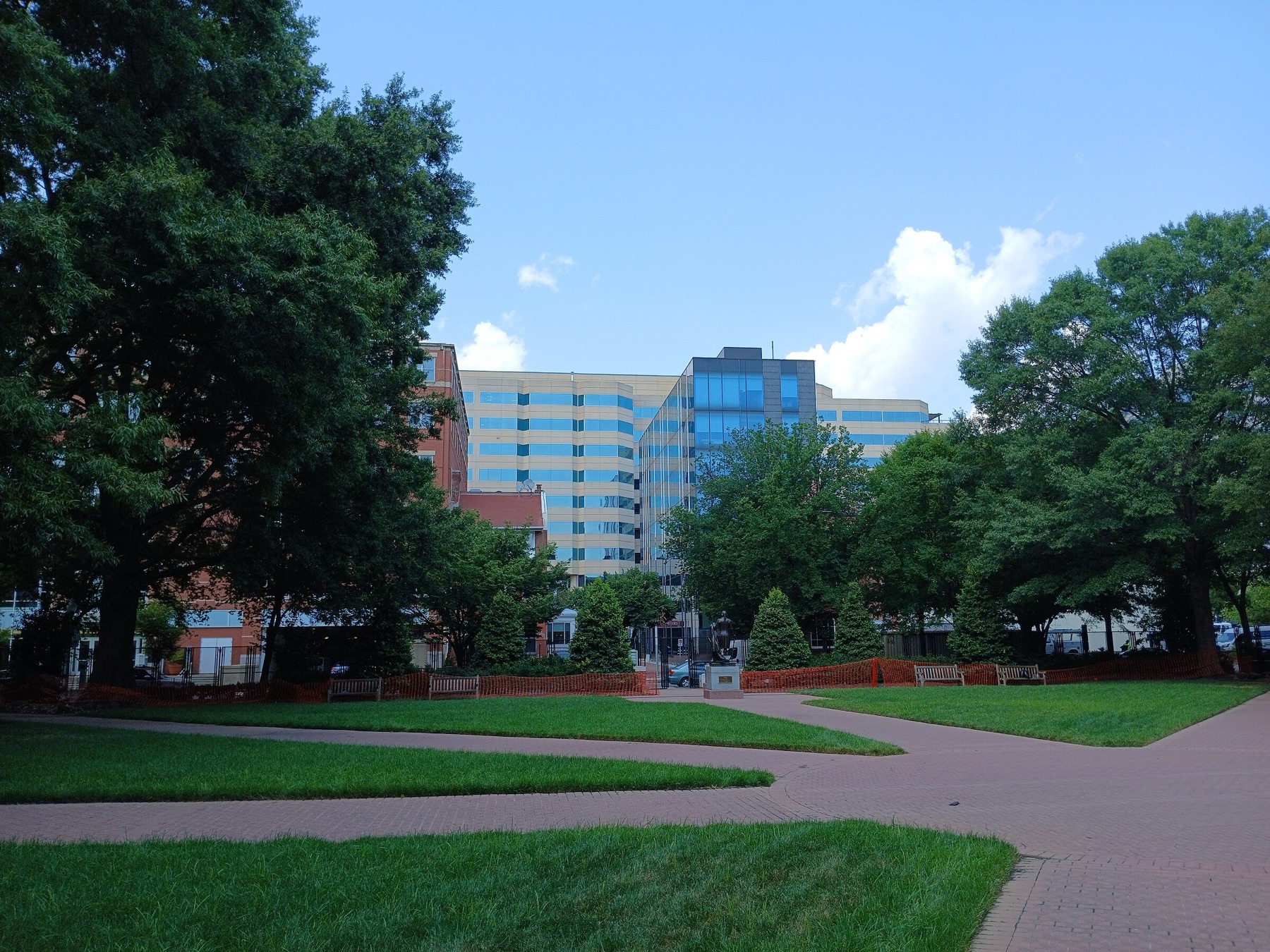
Where you'll live at George Washington University
Where first-years live
GW requires students to live on campus for three years, and first-years are placed on one of two campuses — about 70% in Foggy Bottom's high-rise halls and 30% on the greener Mount Vernon Campus, linked by the free Vern Express shuttle. All halls are air-conditioned, and a meal plan is required. You complete a housing profile and can request a roommate through the GW Home portal.
GW's legendary first-year hall — an 11-story building in the heart of Foggy Bottom, fully rebuilt in 2022 around a sunlit atrium, with singles and doubles sharing private bathroom suites. The biggest and most social freshman address on campus.
The other Foggy Bottom first-year buildings: Francis Scott Key (FSK), Guthridge, and Madison, with doubles, triples, and quads (plus Madison's six-person suites), all with private bathrooms — steps from the Metro and the National Mall.
A leafy, traditional residential campus in the Palisades a few minutes northwest — doubles with semi-private adjoining bathrooms and a tighter-knit feel, with the free Vern Express running to Foggy Bottom around the clock.
Home to the University Honors Program living-learning community on the Mount Vernon Campus — quads with single bedrooms and a built-in academic community for honors first-years.
The George Washington University move-in checklist
Before you order any of this
Students get six months of Prime free, then half price after that. Free fast shipping on everything below, so it’s worth sorting out before the boxes start going in the cart.
See if you’re eligible ↗The “Shop” links and the Prime Student link above are Amazon affiliate links — signing up or buying may earn AllDorms a small commission, at no extra cost to you.
Bedding6
Bath5
Laundry4
Storage & organization6
Making it livable6
Desk & study4
Electronics6
Cleaning5
Kitchen — within the rules5
Health & meds4
Clothing — see the seasonal guide7
Move-in day go-bag5
Your items
Anything you add saves on this device.
Washington logistics, sorted
How to send a package to a GW student
[Residence Hall Name], Room [#]
Washington, DC 20052
Two campuses and the Vern Express
A three-year residency requirement
Washington & around
The National Mall & the monuments
Campus sits blocks from the White House, the Lincoln and Washington memorials, the Smithsonian museums, and the Kennedy Center — the monuments are a normal evening run, not a field trip.
Georgetown
GW's historic neighbor is a short walk or bus west along the Potomac — Georgetown's shops, restaurants, and waterfront are the go-to weekend stroll.
Foggy Bottom & the West End
A Whole Foods, Trader Joe's, and CVS sit within a few blocks, along with cafés and the GW Hospital — everything a city dorm needs is walkable.
Metro & the Vern Express
The Foggy Bottom–GWU Metro station (Blue/Orange/Silver lines) is right on campus, and the free Vern Express shuttle links the two campuses — so a car is unnecessary, and Reagan National (DCA) is about 15 minutes away by train.
Where to stay near George Washington University
Foggy Bottom & West End hotels
Walk to campusThe State Plaza Hotel, One Washington Circle, and the West End's Melrose and Ritz-Carlton sit within a few blocks of campus — the most convenient bases for move-in, walkable to the halls.
The Watergate Hotel
~5-min walkThe iconic riverfront hotel beside the Kennedy Center, a short walk from Foggy Bottom — a memorable splurge for move-in or Family Weekend.
Downtown DC & Georgetown hotels
~10–15 minDowntown DC near the White House and Georgetown have far more rooms a short Metro ride or drive away when the Foggy Bottom hotels fill up.
George Washington University gear & gifts
George Washington University — links & contacts
- Campus Living & Residential Education: living@gwu.edu
- Phone: 202-994-2552